As 2026 approaches, property tax reform is gaining national attention as homeowners grapple with rising assessments and higher tax bills. In many parts of the country, property values surged faster than incomes, leaving owners paying more in taxes even when nothing about their property changed. These pressures have prompted lawmakers in several states to reconsider how property taxes are assessed, capped, and challenged.
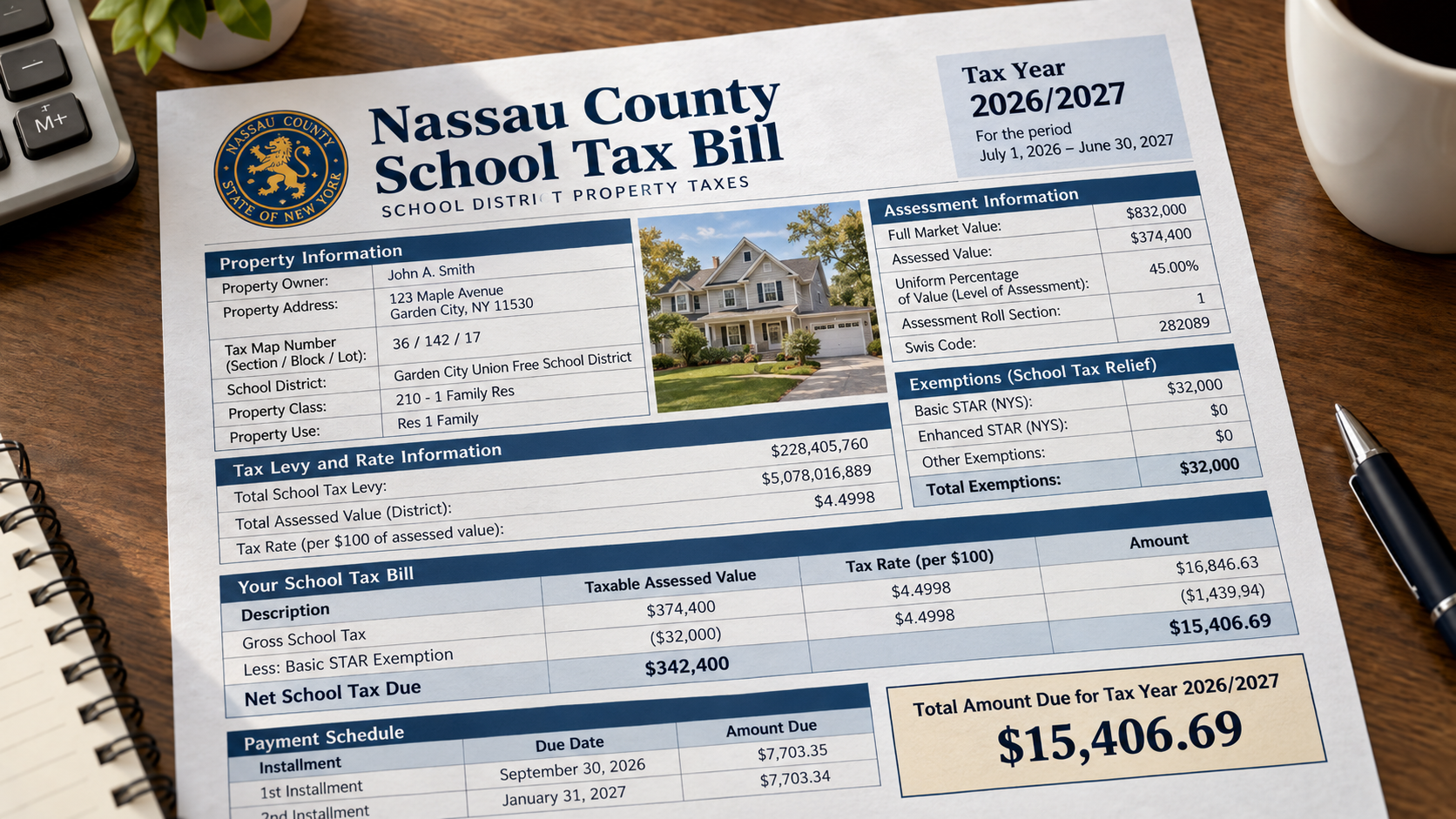
While many of the most publicized reform efforts are unfolding outside New York, the underlying issues driving those discussions are familiar to Long Island homeowners. Nassau and Suffolk Counties consistently rank among the highest-taxed regions in the nation, making assessment accuracy and taxpayer protections especially critical.
Why Property Tax Reform Is Gaining Momentum
Property taxes remain a primary source of funding for schools, municipalities, and local services, but they are also one of the most unpredictable expenses homeowners face. Rapid assessment increases can lead to sudden tax hikes, even when market conditions later soften or when comparable properties are assessed differently.
In response, lawmakers across the country have increasingly focused on proposals aimed at stabilizing tax burdens, improving assessment accuracy, and increasing transparency in valuation practices. These efforts range from modest adjustments to more fundamental changes in how property taxes are structured and administered.
Examples of Proposed or Emerging Reforms
Across the country, legislators are considering a variety of approaches designed to address rising property taxes. Many proposals focus on protecting long-time homeowners from sudden assessment spikes by expanding exemptions or limiting how quickly taxable values can increase. This concern resonates in New York, where programs such as STAR offer partial relief but do not address whether a property is assessed fairly in the first place.
Other reform efforts concentrate on improving transparency and consistency in the assessment process. Several states are exploring enhanced oversight or changes to valuation methodologies intended to better reflect real-world market conditions and reduce disparities between comparable properties. These discussions mirror long-standing concerns in New York, particularly in counties where assessments may not move in step with market conditions or may impact similar properties unevenly.
In addition, some states are debating limits on annual tax growth or granting local governments greater discretion to moderate sharp increases. Although New York’s property tax structure differs from many of these states, the national trend highlights growing recognition that assessment fairness—not tax rates alone—plays a central role in property tax affordability. In New York, that concern is addressed through the
formal tax grievance process, which allows property owners to challenge excessive or unequal assessments.
What This Means for Long Island Property Owners
While many reform proposals making headlines focus on other states, the forces behind them are well known to
Nassau and Suffolk County homeowners. Long Island property taxes remain among the highest in the country, and assessments play a significant role in determining annual tax bills.
Unlike states considering sweeping legislative changes, New York relies on the tax grievance system to correct assessment inequities. Property owners who believe their assessment exceeds market value or is unequal compared to similar properties may be entitled to relief through
the grievance process. As national attention continues to focus on property tax reform, understanding existing
grievance rights in New York becomes increasingly important.
Why Staying Informed Matters
The growing national focus on property tax reform underscores the importance of assessment accuracy and taxpayer protections. Even in states pursuing legislative change, relief often depends on mechanisms that already allow property owners to contest unfair assessments. In New York, the grievance process fills that role, offering a practical way to seek relief without waiting for broader reform.
For Long Island homeowners concerned about rising tax bills, staying informed about both national trends and local grievance rights can help ensure they are prepared to act when assessments increase..